
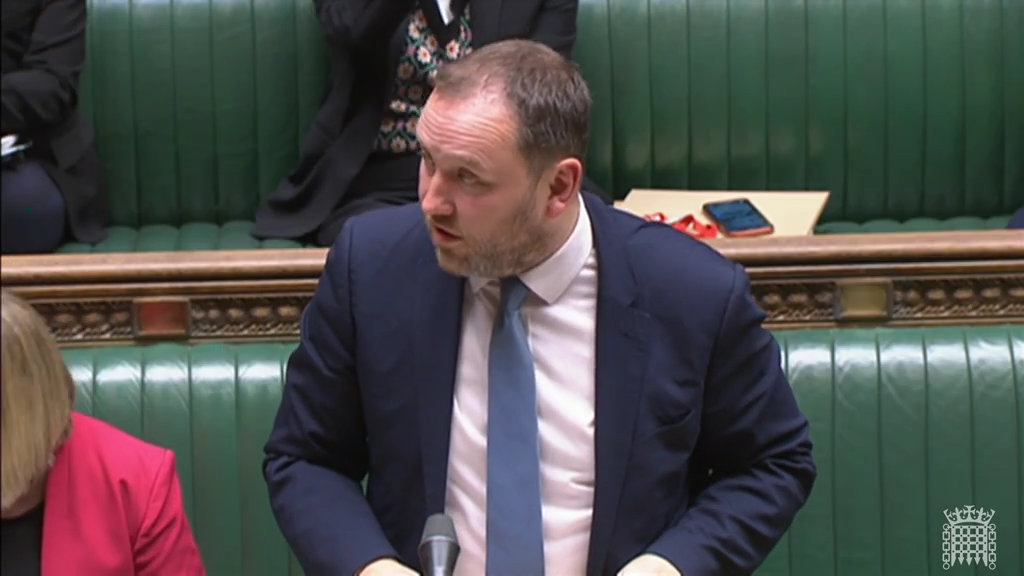
Last month, during Scotland Questions in Parliament, I raised the shortage of GPs in South Edinburgh. This came in response to a question from a parliamentary colleague in West Lothian, showing just how widespread these problems are across Scotland.
I highlighted that Edinburgh is short of more than 10,000 GP places. Despite the UK Government’s most recent spending review delivering an additional £5.8 billion in health-related funding for Scotland, the Scottish Government has failed to use that money to improve local GP services. I called on them to do so.
You can watch my intervention here: https://fb.watch/B8qRu1lMMb/
This also comes in the context of the Prime Minister’s recent announcement of a long-term plan to reduce NHS waiting lists in England. This plan includes millions of new appointments and has already brought waiting times down to a two-year low. I welcomed this move, which I believe will be transformational for the NHS.
You can read more about the plan here: https://www.gov.uk/government/news/pm-sets-out-plan-to-end-waiting-list-backlogs-through-millions-more-appointments
While health is rightly devolved to the Scottish Government, and this plan does not apply in Scotland, the associated funding does. Through the Barnett formula, this means an extra £5.8 billion is now available to the Scottish Government for health. I, along with MSP colleagues, will continue to press them to invest this money in improving GP services in South Edinburgh and across Scotland.
Meanwhile, the Lothian Local Medical Committee (LLMC), the official body representing GPs in our area, has issued a powerful public statement outlining the scale of the crisis. It’s an excellent and important statement, and I’ve included it in full below.
It’s a timely reminder that the current problems aren’t the fault of hardworking GPs or local practices, who are often just as frustrated as patients. The blame lies with long-term underfunding and failure to invest in GP services by the Scottish Government, even as new housing developments continue to increase demand.
The LLMC’s full statement is below:
“General Practice across the country has been struggling for years. However it has now reached a critical situation with less money, less doctors and less staff to meet the growing needs of the Scottish population. So how did we get here?
In 2017, the Scottish Government recognised this and promised to introduce a new contract, starting in 2018 and to be fully implemented within 3 years. At the time, the then Health Secretary Shona Robison MSP (now Deputy First Minister) said “We equally recognised the fundamental challenges faced by general practice, not least growing workload and increasing risk”.
Unfortunately, for the first time in the history of the NHS, large parts of this contract have not been implemented. Even worse, when Health Boards haven’t been able to spend the money that they were given to employ additional pharmacists and other professionals to support General Practice, the money has had to be returned to Scottish Government rather than being able to be spent supporting your local practice.
Scottish Government promised transitional payments to practices to recognise the non-delivery of this contract, but then withdrew that funding, even after some practices had already used the money for additional cover.
There have been many further challenges both local and national since then;
· Over half of the practices in Lothian have recently received huge bills for their facilities from NHS Lothian, over and above what they were already paying. This will amount to £1.6 million per year across the practices affected, and, without any additional funding coming into practices, it’s likely this will lead to reduced staffing, with fewer appointments and longer waits to be seen.
· All practices in Lothian are impacted by Scottish Government not funding an increase in compulsory pension contributions. This is only occurring in General Practice in Scotland as English and Welsh Governments have already committed to paying this, and there is funding in place for all staff in hospitals. Again, this comes out of the funding available to practices to pay for administrative staff, nurses and doctors.
· Many people don’t know that the funding for practices comes through a national formula and doesn’t reflect how many times patients are seen. Practices are paid the same whether you are seen once or a hundred times per year. In 2017, the Scottish Government recognised that it wasn’t sufficient and promised to move towards a new funding model. This still hasn’t happened, and the funding uplifts have been substantially below inflation since then.
· The average patient used to contact their practice 3-4 times per year. This has increased to 6-7. The reasons for this are multiple and include more elderly, more people with illness (often multiple) and more treatment options. The large growth in waiting lists has also had a big impact, with GP appointments being taken up with ongoing management whilst awaiting definitive procedures.
· We all know how much energy costs have risen over the last couple of years and with insufficient funding to cover this, again this money comes out of the services practices can provide.
· Part of the funding which comes from government every year is earmarked for non-GP staff pay rises e.g. receptionists, nursing staff, practice managers. This has always matched what was given to staff working elsewhere in the NHS. But for the first time last year, the Scottish Government decided to break this link, meaning practices had to fund the shortfall or risk losing staff.
· The number of GPs in Scotland is falling. As part of the 2017 contract the Scottish Government promised that numbers would rise by 800, however when doctors in training are excluded from the figures, the numbers are actually reducing! Since 2013, the GP WTE (whole time equivalent) workforce has fallen by 5.35% – a fall of 196.7 WTE GPs. In that same time period, the number of practices has fallen by 9%, average list sizes have increased by 18% and the total patient population has increased by 7%. 42% of practices in Scotland report at least one GP vacancy. The number of GP partners has reduced by 14% between 2012 and 2022. In the last 20 years the ratio of GPs to hospital consultants has halved, despite many things which used to be done in hospital now commonly being done in practice, and this reflects the falling share of the NHS budget spent in General Practice.
· In many areas, practice buildings are too small and are outdated. Unfortunately, Scottish Government has now cancelled all funding for new builds, leaving many working out of buildings no longer fit for purpose. Scottish Government has also withdrawn sustainability loans, a scheme to reduce the risk for GPs who own their building. This leads to financial loss which again impacts on the services they can deliver.
· With less staff and more work, better IT would help improve efficiency. Our IT is cumbersome and unreliable which often impacts on the care of our patients, increasing inefficiency and damaging staff morale. We are the only country in Britain still using paper prescriptions – this alone costs a huge amount of clinical, administrative and patient time.
· In order to make systems better we need time to learn and develop. We used to receive ten half days per year to work with our teams on making practices better for everyone. The support for this was withdrawn by NHS24 and Scottish Government have done very little to reintroduce any form of reliable support.
Incredibly, despite all that we have just described, your practice remains absolutely committed to provide the best service that it can.
However, if you’re not satisfied with the service you receive, look beyond the practice and instead hold those with the power to improve matters to account. Scottish Government needs to do more to directly support General Practice, the bedrock of the NHS.”
Thanks again to those who have signed my petition. If you haven’t already, please do consider signing and sharing.